
Many homeowners hear this term and get confused.
Interior architect.
Isn’t that identical to an interior designer?
Not exactly.
When planning a home in Pune, structure matters.
Layouts affect daily comfort.
Interior architects focus on space functionality.
Not just how they look.
They combine design with technical planning.
This improves usability and safety.
A residential interior design company often includes interior architects.
They ensure every detail is on point.
If you are planning renovations or a new home, clarity helps.
Understanding this role prevents mistakes.
In this blog, we clarify the role simply.
You’ll know what an interior architect does.
You’ll also understand how interior design consultancy differs.
And why turnkey interior design becomes effortless with structured planning.
What Is an Interior Architect?
An interior architect designs internal spaces structurally.
They work beyond surface decoration.
They study layout, structure, and circulation.
They pivot on space optimization.
Interior architects ensure safety and technical compliance.
Design remains practical as well as durable.
Unlike decorators, they handle planning details deeply.
Walls, lighting, and storage line up properly.
Why Interior Architecture Matters in Residential Projects
Modern homes demand smart layouts.
Bad planning wastes space.
Interior architecture refines:
- Natural light flow
- Ventilation
- Storage efficiency
- Movement circulation
Structural changes require proficiency.
Removing walls needs proper planning.
Interior architects coordinate with contractors.
Safety remains a top priority.
A professional residential interior design company ensures structured results.
Not just attractive visuals.
What an Interior Architect Actually Does
1. Space Planning and Layout Design
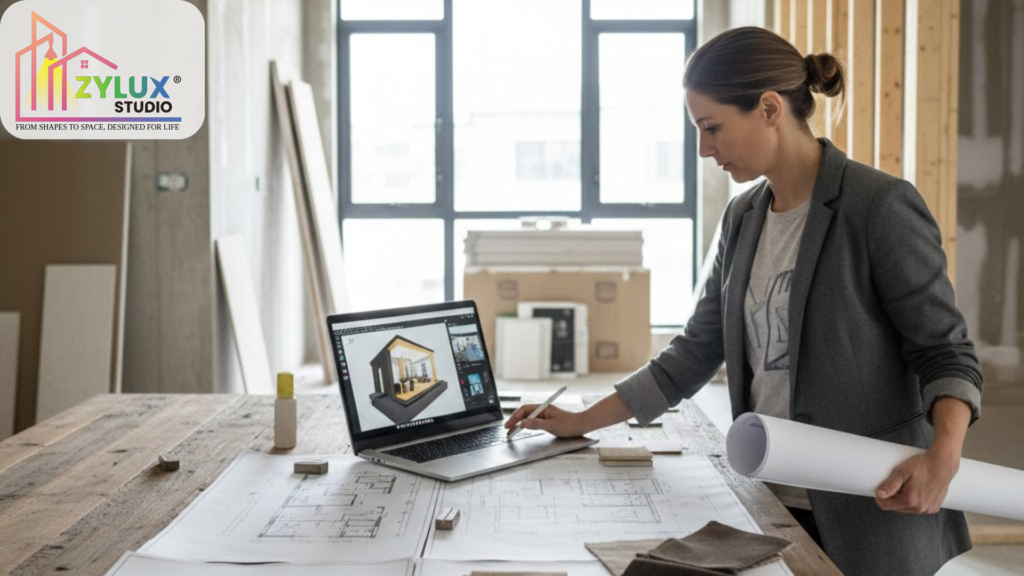
They analyse your floor plan carefully.
Movement becomes smooth and logical.
Rooms get defined clearly.
Clutter lessened naturally.
2. Structural Modifications
Interior architects assess load-bearing walls.
They plan safe modifications.
Ceiling levels and partitions get optimised.
Nothing is perilous to stability.
3. Electrical and Plumbing Coordination
Switchboards and lighting need proper planning.
Plumbing requires precision.
Interior architects coordinate technical drawings.
Future remodels are reduced.
4. Material and Finish Planning
Materials must suit climate and usage.
Durability matters.
They recommend suitable finishes.
Maintenance is manageable.
5. Custom Furniture Integration
Custom furniture design fits structural planning.
Storage aligns with layout.
Nothing feels imposed.
Everything integrates seamlessly.
6. Site Supervision and Execution
Interior architects oversee site progress.
Execution matches drawings.
Quality checks happen regularly.
Mistakes get corrected early.
This connects directly with turnkey interior design.
One team manages everything end-to-end.
Interior Architect vs Interior Designer vs Contractor
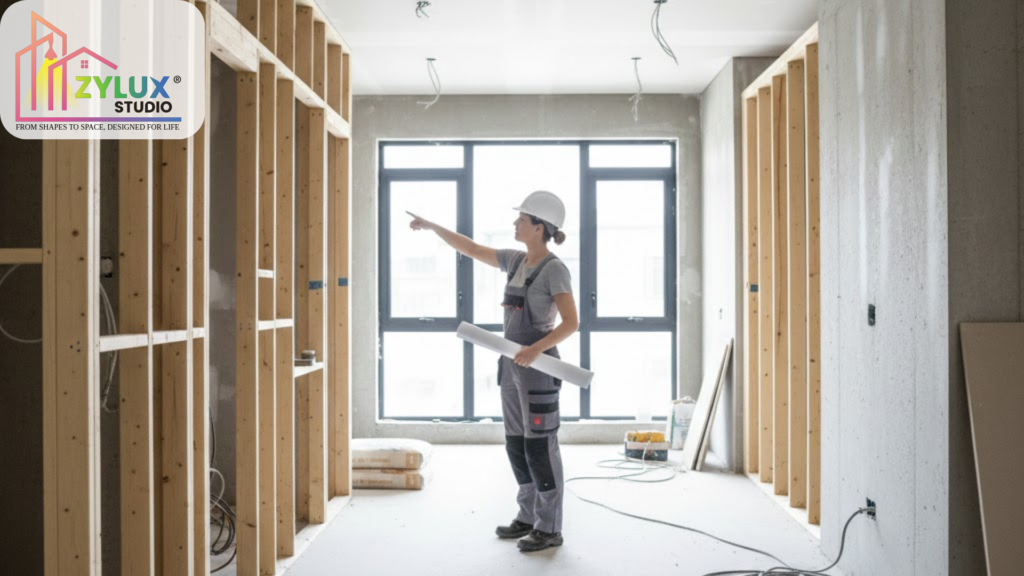
Here’s a simple breakdown:
- Interior designer centres on aesthetics
- Contractor pivots on execution
- Interior architect handles structural planning
An interior design consultancy may proffer design ideas only.
Turnkey interior design handles everything.
A residential interior design company merges all roles.
This ensures harmony.
Pune Case Example
A Pune apartment on NIBM road felt cramped initially.
Walls divided space unnecessarily.
An interior architect redesigned the layout.
One partition was safely eliminated.
Lighting placement improved significantly.
Storage became smarter.
The result felt spacious and practical.
Design followed structure.
Zylux Studio blends architectural planning with execution.
Projects stay structured.
Conclusion
Interior architects shape how homes function.
They go far, far beyond decoration.
They plan layouts, structure, and technical details.
Comfort is upgraded long-term.
Working with a residential interior design company ensures clarity.
Everything aligns properly.
Interior design consultancy offers ideas.
Turnkey interior design delivers complete solutions.
Zylux Studio provides structured residential interiors in Pune.
We merge planning and execution seamlessly.
Planning a home renovation in Pune?
Contact Zylux Studio for a professional interior consultation now.